60 Colchester Square #1, Kanata, ON K2K 2Z9



Many patients in Kanata hesitate before asking about veneers. They picture the overly bright, uniform smiles they have seen on television. Understanding why modern veneers look like natural teeth, not fake ones, can completely change that concern. Today’s dental technology makes it possible to create results that even close friends may not notice are veneers at all.
The fear of looking unnatural is one of the most common worries Dr. Allen Feng hears at Village Green Dental Care. It is a valid concern worth exploring in detail. Once you understand how the process works, that fear tends to disappear quickly.
Why Did Old Veneers Sometimes Look Fake?
Early porcelain veneers had a reputation for looking overly white and flat. The materials available decades ago lacked the depth and light-reflecting properties of real enamel. That created a distinctive, artificial appearance that many patients still associate with veneers today.
Older techniques also relied on a single, uniform shade for the entire veneer. Natural teeth, however, are not one solid colour. They have subtle variations from the gumline to the tip, making them look alive and dimensional. Early veneers simply could not replicate that complexity.
Dental materials have advanced dramatically since then. Modern ceramics and composite resins are designed specifically to mimic enamel. Understanding those advances is key to appreciating why the fear of looking fake is largely outdated today.
How Modern Shade Matching Creates a Natural Result in Kanata
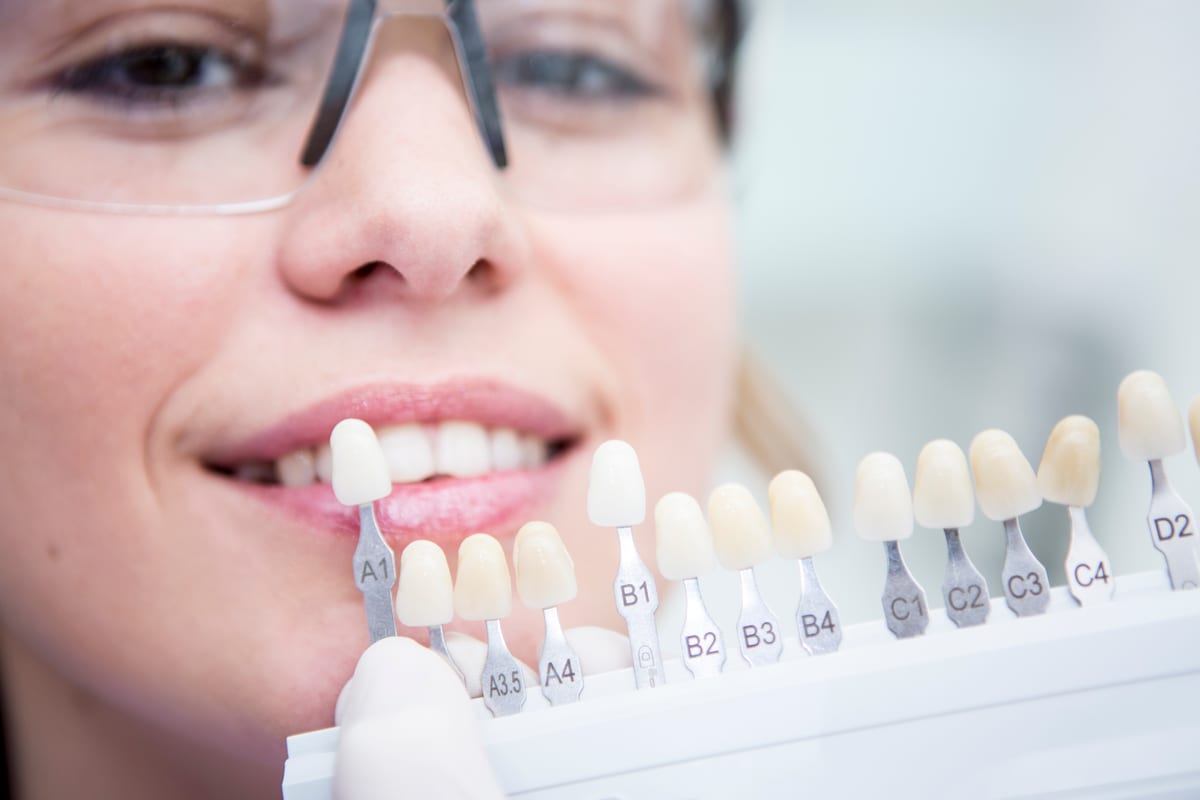
Shade matching is now one of the most precise steps in the veneer process. Dr. Allen Feng uses a detailed shade guide that measures colour across multiple zones of each tooth. This means the veneer gradually shifts in tone, just like a real tooth does.
Digital shade-matching technology plays a significant role in this accuracy. Spectrophotometers measure the exact wavelengths of light your teeth reflect. That data guides the dental laboratory when crafting your custom veneers.
The goal is always to complement your skin tone, eye colour, and facial features. A shade that looks stunning on one person may look unnatural on another. Personalised shade selection is what separates a great result from a generic one.
- Shade guides measure colour in multiple tooth zones, not just one
- Digital tools capture precise light-reflection data from your existing teeth
- Your complexion and facial features influence the final shade choice
- The veneer tone transitions naturally from gumline to biting edge
- Custom laboratory work ensures consistency across all visible teeth
The Science of Translucency: Making Veneers Look Alive
Real teeth are not opaque. Light passes into enamel and reflects back in a complex, layered way. This quality is called translucency, and it is what gives natural teeth their lifelike glow.
Modern porcelain is engineered to replicate that optical behaviour. Dental ceramics now come in varying levels of translucency. A skilled dental team chooses the right level based on where the veneer is placed and how much natural tooth structure remains beneath it.
The incisal edges — the biting tips of your front teeth — are the most translucent part of any natural tooth. High-quality veneers incorporate this feature intentionally. That subtle see-through quality at the tip is one of the clearest signs of a natural-looking result.
Layering techniques used by dental ceramists add further depth. Rather than applying one uniform layer, technicians build the porcelain in stages. Each layer contributes a slightly different tone or opacity, mimicking real enamel structure.
What to Expect During the Veneer Process at Village Green Dental Care
Understanding the steps involved helps patients feel confident about their decision. The process at Village Green Dental Care is thorough and patient-centred. Dr. Allen Feng takes time to explain every stage before any treatment begins.
Here is a general overview of what the veneer journey looks like:
- Consultation: Dr. Feng evaluates your teeth, discusses your smile goals, and explains realistic outcomes.
- Shade and shape planning: Digital tools and shade guides are used to map your ideal veneer specifications.
- Tooth preparation: A thin layer of enamel is gently removed to create space for the veneer.
- Impressions or digital scans: Precise records are sent to a dental laboratory for custom fabrication.
- Temporary veneers: You wear temporaries while your permanent veneers are crafted.
- Fitting and bonding: Dr. Feng checks the fit, colour, and translucency before permanently bonding each veneer.
Patients who experience dental anxiety should know that support is available. Village Green Dental Care offers Sedation Dentistry Kanata patients trust, making the process comfortable from start to finish.
Village Green Dental Care also welcomes younger patients. Families looking for compassionate care can explore Childrens Dentistry Kanata services alongside adult cosmetic treatments.
Common Veneer Myths Patients in Kanata Should Stop Believing
Several persistent myths prevent patients from exploring veneers as a real option. Separating fact from fiction helps you make a more informed decision about your smile.
- Myth: Veneers always look blindingly white. Fact — shade selection is entirely personalised. Natural-looking whites and off-whites are the most common choice.
- Myth: Veneers look the same on everyone. Fact — each veneer is custom-shaped to match your unique facial proportions.
- Myth: You can always tell someone has veneers. Fact — high-quality, well-matched veneers are virtually undetectable to the casual observer.
- Myth: Veneers damage your teeth permanently. Fact — modern minimal-prep techniques preserve as much natural tooth structure as possible.
- Myth: Veneers require excessive maintenance. Fact — regular brushing, flossing, and dental visits are all that is needed to keep them looking great.
Many of these myths stem from outdated information or poorly executed work. Choosing an experienced provider like Dr. Allen Feng makes a significant difference in the final outcome.
Conclusion: Your Natural-Looking Smile Starts Here
The question of why modern veneers look like natural teeth, not fake ones, comes down to better materials, precise shade matching, and advanced translucency techniques. Technology has genuinely transformed what is possible in cosmetic dentistry. Patients in Kanata no longer need to choose between improving their smile and looking natural — they can achieve both.
Dr. Allen Feng and the team at Village Green Dental Care are committed to results that feel authentically yours. Every veneer treatment begins with listening to what you want and building a plan around your unique features. The goal is never a cookie-cutter smile — it is your best smile. Book Now to schedule your appointment with our team.
Frequently Asked Questions
Will my veneers look too white or unnatural?
Not with modern shade-matching techniques. Dr. Allen Feng carefully selects a shade that complements your skin tone and existing teeth. The goal is always a result that looks natural rather than artificially bright.
How long do porcelain veneers last?
With proper care, porcelain veneers typically last between ten and fifteen years. Maintaining good oral hygiene and attending regular dental check-ups significantly extends their lifespan. Avoiding habits like nail-biting or using teeth as tools also helps protect them.
Do veneers feel different from natural teeth?
Most patients adapt to veneers within a few days. Modern veneers are designed to feel smooth and comfortable against the lips and tongue. Any initial sensitivity usually resolves quickly after the bonding appointment.
Can veneers be applied to just one or two teeth?
Yes, veneers can be placed on a single tooth or a small group of teeth. Dr. Feng will carefully match the shade and shape to blend seamlessly with your surrounding natural teeth. Precise shade matching is especially important when only a few veneers are placed.
Are veneers a good option if I have dental anxiety?
Absolutely. Village Green Dental Care offers sedation options to help anxious patients feel comfortable throughout the procedure. Dr. Feng takes a gentle, patient-centred approach to ensure your experience is as stress-free as possible.